
Choose Your Language / 言語を選択:
Introduction
A Gem of an Anti-War Animation Depicting the Beauty of Daily Life and Human Dignity That Are Not Lost Amid War
August 6 is the day in 1945 when the world’s first atomic bomb was dropped on Hiroshima. At 8:15 in the morning, a single bomb took the lives of some 140,000 people (an estimate through the end of 1945), and a beautiful city was reduced to ruins in an instant — one of the most tragic days in human history.
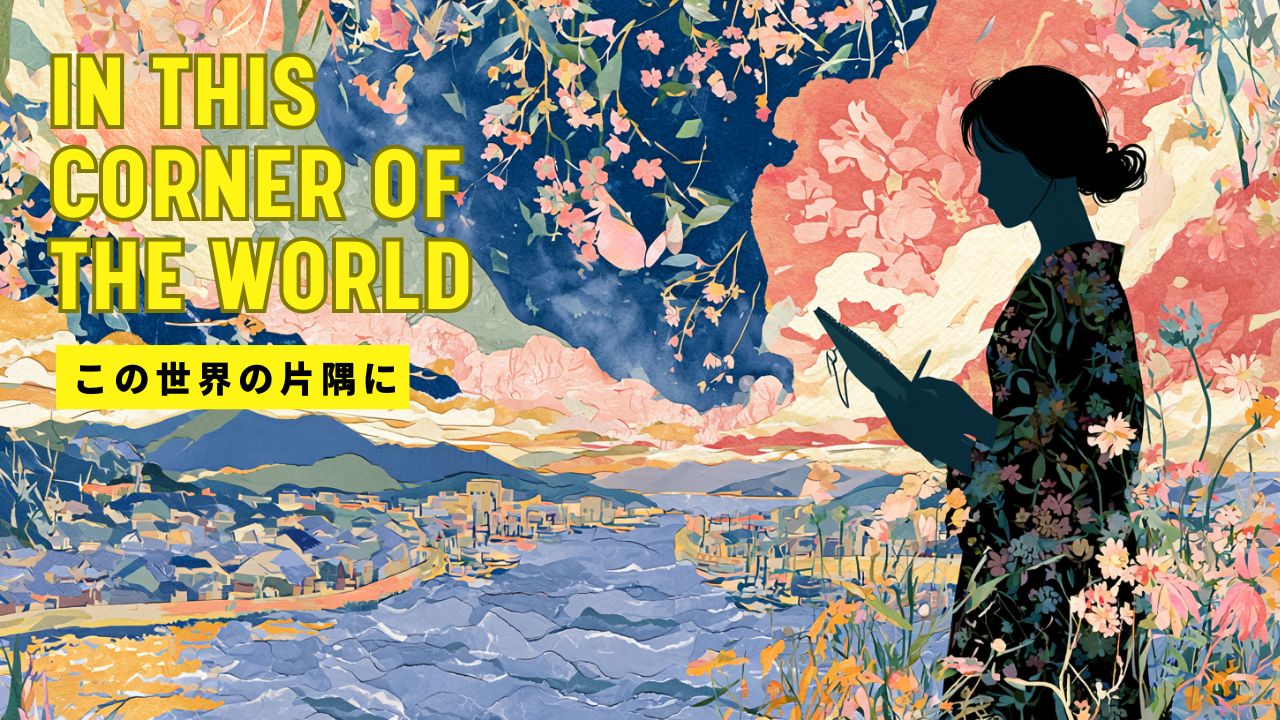
As the film to watch on this historic day, we strongly recommend In This Corner of the World, released in 2016. This work by director Sunao Katabuchi is a masterpiece that will remain in the history of contemporary animation, depicting everyday life during the war from the viewpoint of ordinary citizens buffeted by it.
Based on the manga of the same name by Fumiyo Kouno, the film is set in the city of Kure, near Hiroshima, and carefully draws the figures of people living through the era of war through the eyes of one woman. Rather than loudly denouncing war, it depicts, quietly yet powerfully, the influence of war as it seeps into daily life, and the human creativity and affection that are still not lost. It is an important work that offers a precious opportunity to understand the extraordinary event of the atomic bombing as the everyday experience of one woman.
Basic Information & Synopsis
→ For synopsis and production information, see our Database Article
Director: Sunao Katabuchi
Year: 2016
Runtime: 129 minutes
Production: MAPPA
Commemorative Day: Anniversary of the Atomic Bombing of Hiroshima (August 6)
Background Knowledge
Historical Background: The Hiroshima Atomic Bombing and the City of Kure
At 8:15 a.m. on August 6, 1945, the U.S. military’s B-29 bomber “Enola Gay” dropped an atomic bomb known as “Little Boy” at an altitude of about 600 meters over the city of Hiroshima. The temperature at the hypocenter reached about 4,000 degrees; buildings within a radius of about 2 kilometers were almost entirely destroyed, and some 140,000 people (an estimate through the end of 1945) died.
Kure lies about 20 kilometers southeast of Hiroshima, a naval-port city that was a principal base of the Imperial Japanese Navy. Many warships, including the battleships Yamato and Musashi, were built there, and munitions were produced at the naval arsenal. For this reason it became an important target of Allied attack, and in 1945 it suffered fierce air raids.
The years the film portrays — 1943 to 1945 (Shōwa 18 to Shōwa 20) — were a period when the Pacific War intensified and air raids on the Japanese home islands began in earnest. From the latter half of 1944 in particular, full-scale strategic bombing by B-29s began, and not only military facilities but also the lives of civilians were greatly affected.
The Daily Life of Ordinary People Under Wartime
The daily life of ordinary people under wartime, carefully depicted in the film, is an accurate portrayal grounded in historical fact. Under the rationing system, rice and clothing ran short, and people maintained their lives with substitute foods and by remaking old clothes.
Mutual surveillance through the neighborhood-association system, military drills such as bamboo-spear training, life in nighttime darkness under blackout controls — war permeated every aspect of daily life. The ingenuity Suzu shows in the film was the practical wisdom of living that women of the time actually practiced.
Air-raid warnings and evacuation to bomb shelters were also everyday scenes, and in Kure especially, where the munitions industry was concentrated, air-raid sirens rang out almost daily once 1945 began.
Fumiyo Kouno’s Original Work and Director Sunao Katabuchi’s Direction
The original author, Fumiyo Kouno, is a manga artist from Hiroshima who created this work based on her own family’s accounts and on research at the Hiroshima Peace Memorial Museum. By depicting war not as something special but as an event on the extension of daily life, the work becomes one through which the essence of war can be understood more deeply.
Director Sunao Katabuchi encountered the original work when it was recommended to him by the director of the Hōfu City Cultural Assets and Local History Museum, who had cooperated on his previous work Mai Mai Miracle. When he sent the original author a letter expressing his passionate wish to animate it, together with a self-made DVD, Kouno recalled that Katabuchi’s past work Famous Dog Lassie had been one of her own guideposts, felt this project to be “fate,” and resolved to cooperate.
Production Background and Crowdfunding
In animating the work, director Katabuchi carried out thorough period research, striving to reproduce as accurately as possible everything down to the buildings, clothing, food, and household goods of the time. The topography of Kure and the state of the naval port were also precisely reconstructed on the basis of period materials.
The production team, which struggled to raise production funds, began crowdfunding in March 2015, reached its initial goal of 20 million yen eight days later, and ultimately gathered 39.12 million yen in support from 3,374 people across all 47 prefectures of Japan. This was the highest record in the history of crowdfunding for a film in Japan at the time. This money, however, was not for the entire production cost but for securing staff and creating a pilot film for promotion.
Changes from the Original Work
The film version makes several important changes from the original:
Changes to the story structure: The scenes featuring Rin, a courtesan who is an important character in the original, are greatly reduced, and the structure focuses on the relationship between Suzu and Keiko.
Addition of a masculine viewpoint: Complementing the original, which was drawn from a woman’s perspective, masculine viewpoints are added, such as depictions of weapons like warships and fighter planes and the thoughts of male characters.
Change to the lines at war’s end: Suzu’s monologue after the Emperor’s radio broadcast is changed from the political content of the original to content about food, befitting someone who had been in charge of cooking.
The director especially emphasized the viewpoint of “war within daily life,” directing so that war is not treated as special but blends naturally into a part of people’s lives. Through this, the audience can feel war not as an event of the distant past but as a familiar reality.
What Makes It Exceptional
Expressive Power as Animation and Thorough Period Research
The greatest strength of this work is the distinctive expressive technique unique to animation, and the overwhelming accuracy of its period research grounded in historical fact.
Innovative animation expression: Director Katabuchi splendidly renders Suzu’s rich imagination in an animation style where reality and fantasy mingle. Especially impressive is that, by a method different from ordinary limited animation, he draws characters’ movements slowly and allocates many in-between drawings even to small movements, thereby expressing a sense of life without any falseness.
In the film’s latter half, in the scene where Suzu is wounded in an air raid and loses her right hand, an expression imitating a technique called cinécalligraphy (film scratching) is used. This is an homage to the Canadian filmmaker Norman McLaren, an innovative piece of direction that renders the experimental expression of the original manga on screen.
Thorough period research: From May 2010, director Katabuchi traveled to Hiroshima again and again by overnight bus, and — thoroughly excluding hindsight — investigated everything from the daily weather of 70 years earlier, to changes in shops’ stock, to the times air-raid warnings were issued in the Kure raids. Saying “I wanted to depict war not with ideology but as imagery that could be felt,” he insisted on details such as the following:
The subtle difference in accent between the Hiroshima and Kure dialects
The accurate reproduction of the colors of the colored shells of anti-aircraft guns
The depiction of the battleship Yamato‘s entry into port grounded in historical fact
Accuracy to the level where even the content of the semaphore signals on board ship can be decoded
Through this fusion of technical perfection and historical accuracy, the audience can relive the lives of the people of the time and understand, as felt experience, the influence that war had on individual lives. The expressive power unique to animation, and a period re-creation more real than live action, make this work an unparalleled masterpiece.
Related Articles
- In This Corner of the World Database – Synopsis & Production Details
- Sunao Katabuchi – Profile
はじめに
戦争の中で失われない日常の美しさと人間の尊厳を描いた珠玉の反戦アニメ
8月6日は、1945年に広島に世界初の原子爆弾が投下された日です。午前8時15分、一発の爆弾により約14万人(1945年末までの推定)の命が奪われ、美しい街が一瞬にして廃墟と化した人類史上最も悲劇的な日の一つです。
この歴史的な日に観るべき映画として、2016年公開の『この世界の片隅に』(In This Corner of the World)を強く推奨します。片渕須直監督が手がけたこの作品は、戦争に翻弄される一般市民の視点から戦時中の日常を描いた、現代アニメーション史に残る傑作です。
こうの史代の同名漫画を原作とした本作は、広島近郊の呉市を舞台に、ひとりの女性の目を通して戦争の時代を生きる人々の姿を丁寧に描き出しています。戦争を声高に糾弾するのではなく、日常生活の中にしみ込んでいく戦争の影響と、それでも失われない人間の創造性と愛情を静かに、しかし力強く描いた本作は、原爆投下という非日常的な出来事を、一人の女性の日常的な体験として理解する貴重な機会を提供してくれる重要な作品といえるでしょう。
基本情報・あらすじ
→ あらすじや製作情報はデータベース記事へ
監督: 片渕須直
製作年: 2016年
上映時間: 129分
制作: MAPPA
記念日: 広島原爆投下の日(8月6日)
予備知識
歴史的背景:広島原爆投下と呉市
1945年8月6日午前8時15分、アメリカ軍のB-29爆撃機「エノラ・ゲイ」が広島市上空約600メートルで「リトルボーイ」と呼ばれる原子爆弾を投下しました。爆心地の温度は約4,000度に達し、半径約2キロメートル内の建物はほぼ全壊、約14万人(1945年末までの推定)が死亡しました。
呉市は広島市から南東約20キロに位置する軍港都市で、日本海軍の主要基地でした。戦艦「大和」「武蔵」をはじめとする多くの軍艦が建造され、海軍工廠では軍需品が生産されていました。そのため連合軍の重要な攻撃目標となり、1945年には激しい空襲を受けました。
映画の舞台となる昭和18年(1943年)から昭和20年(1945年)は、太平洋戦争が激化し、日本本土への空襲が本格化した時期です。特に昭和19年後半からは、B-29による本格的な戦略爆撃が開始され、軍事施設だけでなく民間人の生活も大きな影響を受けました。
戦時下の庶民生活
映画で丁寧に描かれている戦時下の庶民生活は、史実に基づいた正確な描写です。配給制度により米や衣料品が不足し、人々は代用食や古着のリメイクで生活を維持していました。
隣組制度による相互監視、竹槍訓練などの軍事教練、灯火管制による夜間の暗闇生活など、戦争は日常生活のあらゆる面に浸透していました。映画で描かれるすずの創意工夫は、当時の女性たちが実際に行っていた生活の知恵でした。
空襲警報と防空壕への避難も日常的な光景で、特に軍需産業が集中していた呉市では、昭和20年に入ってからは連日のように空襲警報が鳴り響いていました。
こうの史代の原作と片渕須直監督の演出
原作者こうの史代は、広島出身の漫画家で、自身の家族の体験談や広島平和記念資料館での取材をもとに、この作品を創作しました。戦争を特別なものとして描くのではなく、日常生活の延長線上にある出来事として描くことで、戦争の本質をより深く理解できる作品となっています。
片渕須直監督は、前作『マイマイ新子と千年の魔法』制作に協力した防府市文化財郷土資料館の館長から勧められたのがきっかけで原作と出会いました。アニメ化への熱い思いをしたためた手紙と自作DVDを原作者へ送ったところ、こうのは片渕の過去作品『名犬ラッシー』が自分の道標の一つだったことを思い出し、この企画を「運命」と感じて協力を決意しました。
制作背景とクラウドファンディング
アニメーション化にあたって徹底的な時代考証を行った片渕監督は、当時の建物、衣服、食べ物、生活用品に至るまで、可能な限り正確な再現を心がけています。また、呉市の地形や軍港の様子も、当時の資料をもとに精密に再構築されています。
制作費調達に苦労した製作陣は、2015年3月にクラウドファンディングを開始し、当初目標の2000万円を8日後に達成、最終的に全国47都道府県3374人から3912万円の支援を集めました。これは当時の日本国内での映画作品のクラウドファンディング史上最高記録でした。ただし、この資金は制作費全体ではなく、スタッフ確保と宣伝用パイロット・フィルム作成のためのものでした。
原作からの変更点
映画版では原作からいくつかの重要な変更が加えられています:
物語構成の変更: 原作の重要キャラクターである遊女のリンの登場場面が大幅に削減され、すずと径子の関係に焦点を当てた構成になっています。
男性的視点の追加: 女性の目線で描かれた原作を補完する形で、艦船や戦闘機などの兵器描写や男性登場人物の想いなど、男性的な視点が追加されています。
終戦時の台詞変更: 玉音放送後のすずの独白が、原作の政治的内容から、炊事を担当してきた生活者らしい食料に関する内容に変更されています。
監督は特に「日常の中の戦争」という視点を重視し、戦争を特別視するのではなく、人々の生活の一部として自然に溶け込ませる演出を行っています。これにより、観客は戦争を遠い昔の出来事としてではなく、身近な現実として感じることができます。
優れている点
アニメーションとしての表現力と徹底的な時代考証
本作の最大の優れた点は、アニメーションならではの独特な表現技法と、史実に基づく圧倒的な時代考証の正確性です。
革新的なアニメーション表現: 片渕監督は、すずの豊かな想像力を現実と幻想が混じり合うアニメーション表現で見事に映像化しています。特に印象的なのは、通常のリミテッドアニメとは異なる手法で、人物の動作を緩慢に描き、小さな動作にも多くの中割り作画枚数を割くことで、嘘臭さのない生活感を表現していることです。
映画後半の、すずが空襲で負傷し右手を失う場面では、シネカリグラフィ(フィルムスクラッチ)と呼ばれる手法を模した表現が用いられています。これはカナダの映像作家ノーマン・マクラレンへのオマージュで、原作漫画の実験的表現を映像化した革新的な演出となっています。
徹底的な時代考証: 片渕監督は2010年5月から何度も深夜バスで広島に通い、後知恵を徹底的に排除した上で、70年前の毎日の天気から店の品揃えの変化、呉空襲での警報発令時刻まで、すべて調べ上げました。「理念で戦争を描くのではなく実感できる映像にしたかった」として、以下のような細部にまでこだわっています:
広島弁と呉弁の微妙なアクセントの違い
高角砲の着色弾の色彩の正確な再現
戦艦大和の入港シーンの史実に基づいた描写
艦上での手旗信号の内容も解読できるレベルでの正確性
この技術的完成度と歴史的正確性の融合により、観客は当時の人々の生活を追体験でき、戦争が個人の生活に与えた影響を実感として理解することができます。アニメーションならではの表現力と、実写以上にリアルな時代再現が、この作品を他に類を見ない傑作たらしめています。
関連記事
- この世界の片隅に データベース – あらすじ・製作情報
- 片渕須直 – プロフィール