
Choose Your Language / 言語を選択:
Introduction
A Suspense Thriller Where the Terror Ruled by an Uncracked Cipher Intersects with the Obsession of Those Who Pursue the Truth
August 1, 1969 — on this day, letters of identical content arrived at three newspapers in California: the Vallejo Times-Herald, the San Francisco Chronicle, and the San Francisco Examiner. There was no sender’s name, and no return address was written on the envelopes.
The letter began: “Dear Editor. I am the killer of the 2 teenagers last Christmas at Lake Herman.” Within the text were details of the scene that only the killer and the police could have known — the gun used, the number of shots fired, the brand of ammunition. And each envelope contained one part of a cipher of 408 characters, split into three.
The killer made a demand: publish this cipher on the front page of each paper by the afternoon of Friday, August 1. Otherwise, over the weekend, he would begin killing at random and kill more than a dozen people.
Until this letter arrived, the police departments had not connected the string of incidents. It was the moment when several cases in different jurisdictions were revealed to be the work of a single person, and at the same time the day on which the killer, who would later call himself “the Zodiac,” began an open campaign of terror against society. The killer has not been identified to this day.
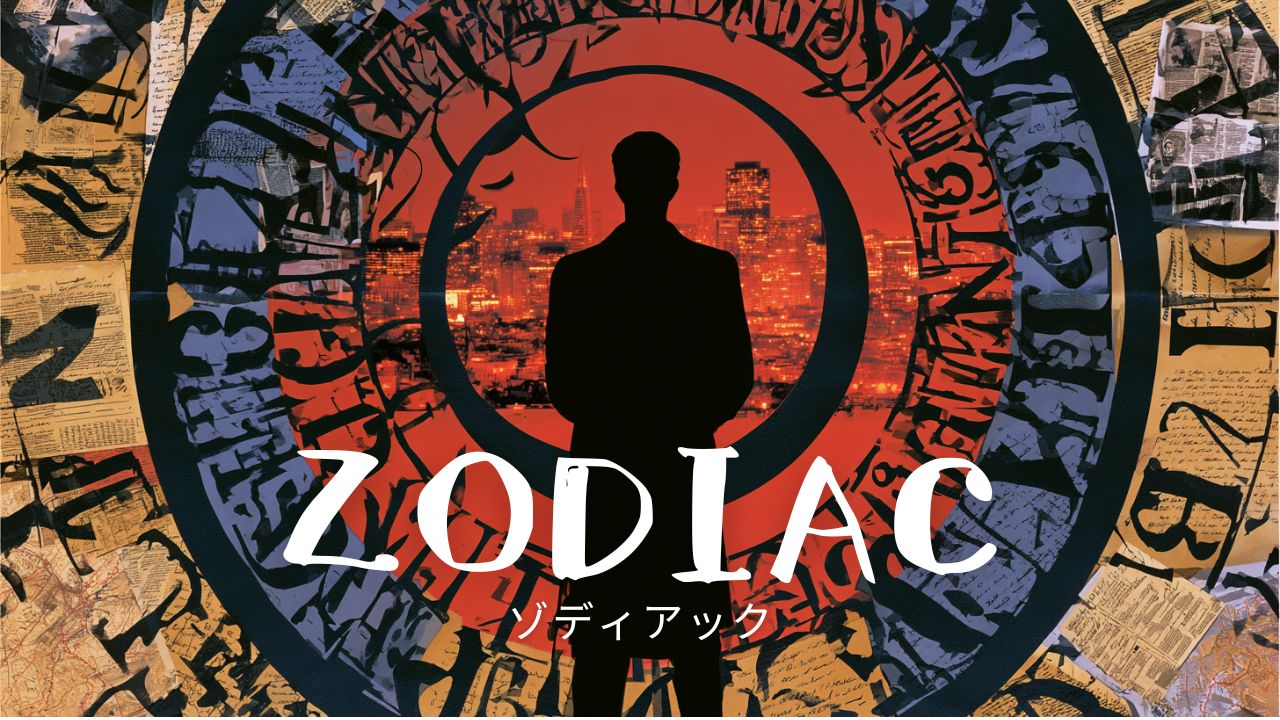
As a film to watch on this day, we strongly recommend David Fincher’s 2007 film Zodiac. This is a masterful suspense thriller that depicts this unsolved case around the ciphers the killer sent to the newspapers.
The way Robert Graysmith, a newspaper cartoonist played by Jake Gyllenhaal, is fascinated by the difficult-to-crack cipher and continues an obsessive investigation goes beyond a mere crime film, depicting the power of ciphers and the nature of mystery, the price brought by an insatiable pursuit of truth, and the psychological effect an unsolvable mystery has on a human being. The full picture of the case, re-created through David Fincher’s thoroughgoing realism and two hours and thirty-seven minutes of meticulous depiction, leaves on viewers a deep impression of the two-sidedness that the cipher, as a means of conveying information, possesses — concealment and threat.
Basic Information & Synopsis
→ For synopsis and production information, see our Database Article
Director: David Fincher
Year: 2007
Runtime: 157 minutes
Production: Paramount Pictures / Warner Bros.
Commemorative Day: The Day the Zodiac’s Cipher Arrived (August 1)
Background Knowledge
The Actual Zodiac Case
The Zodiac case is an unsolved string of murders that occurred in Northern California from December 1968 to October 1969. In Benicia, Vallejo, Lake Berryessa, and San Francisco, four men and three women aged 16 to 29 were attacked, and five died. The killer claimed to have killed 37 people himself, but this is seen as exaggeration.
A characteristic of the case was that the killer continued to send provocative letters to local newspapers, and the letters contained four ciphers. The name “Zodiac” is one the killer gave himself in the letters.
Robert Graysmith the Author
The author of the original work, Robert Graysmith (born 1942), was a political cartoonist at the San Francisco Chronicle. In August 1969, when the first Zodiac letter was opened at an editorial meeting, he was in that room.
In his book, he recorded that moment: feeling anger at the murderer’s coldness, arrogance, and madness, he was hopelessly drawn in and instantly obsessed; he felt this would become one of the great mysteries, and he wanted to solve it.
Graysmith was not a reporter. The one covering the case was his colleague Paul Avery. Even so, he began investigating on his own and continued to pursue the case for thirteen years. He pored over police reports, conducted interview after interview with those involved, cut a manuscript that had initially run to 1,200 pages down to a little over 300, and published Zodiac in 1986.
This book sold more than four million copies worldwide, becoming a representative work of nonfiction dealing with an unsolved case. In 2002 he also published a sequel, Zodiac Unmasked. He ultimately left his job as a cartoonist and became a true-crime nonfiction writer.
The price, however, was not small. Graysmith remarried in 1975 but divorced in 1980. He himself has stated plainly that this breakup was caused by his immersion in the Zodiac case.
There is also criticism of his theory. The observation that his grounds for identifying Arthur Leigh Allen as the killer lean toward circumstantial evidence has been raised repeatedly among researchers of the case. The film, too, keeps a careful distance on this point.
The Making of the Film and Director David Fincher’s Motive
Screenwriter James Vanderbilt was drawn to how Graysmith went from cartoonist to one of the main investigators of the case. He described the project as: “What if Garry Trudeau (the famous satirical cartoonist) woke up one morning and tried to solve the Son of Sam case?”
For David Fincher, the Zodiac case held personal meaning. He spent his childhood in San Anselmo, Marin County, and was living there at the time the first murder occurred.
Fincher recalls: he came home and mentioned that the highway patrol had been escorting the school bus for weeks, and his father, who was working at home, slowly turned his chair and said — yes, that’s right, there is a serial killer who has killed four or five people and calls himself the Zodiac, threatening to shoot out the tires of a school bus with a high-powered rifle and shoot the children as they come off.
For the young Fincher, the Zodiac was “the ultimate boogeyman.”
The director was drawn to the unresolved ending of Vanderbilt’s screenplay, because he felt it was faithful to reality. Fincher considered it his job to dispel the mythologized parts of the case and to make clear what was fact and what was fiction.
He demanded that Vanderbilt rewrite based on the original police reports, because he felt the responsibility of making a film that would, after death, impress guilt upon someone. Fincher, the producers, and the screenwriter spent months interviewing witnesses, the families of suspects, retired and active investigators, and the two survivors.
Fincher says: “Even in our own interviews, when we asked two people, one would confirm a certain aspect and the other would deny it. And more time had passed, memory was affected, and the way a story is told changes perception. So when in doubt, we always followed the police reports.”
The model for the film was Alan J. Pakula’s All the President’s Men. Fincher has said that it too is a story of reporters who try to get at the truth at any cost, and the story of a person who was a newcomer as an investigative reporter, and that it was all about his obsession with wanting to know the truth.
The production team obtained the cooperation of the Vallejo police, hoping that the film might prompt new informants to come forward and lead to the resolution of the unsolved case.
Z408 and Z340 — Two Ciphers
The most famous of the ciphers the Zodiac sent are the 408-character cipher (Z408) and the 340-character cipher (Z340).
Z408 was the one sent, split into three, to the three papers on August 1. The killer claimed “my identity is in this cipher,” but in August 1969, when Donald Harden, a high-school teacher in Salinas, and his wife Bette cracked it in under a week, what was there was a confession to the effect that killing is the greatest fun, and it contained no identity. The killer had been lying.
Z340, sent in November 1969, on the other hand, remained uncracked for 51 years.
In December 2020, a team consisting of David Oranchak of the United States, Sam Blake of Australia, and Jarl Van Eycke of Belgium finally succeeded in cracking it, and the FBI formally certified it.
The deciphered text conveyed, in essence, the killer’s taunting of the investigation — mocking their struggle to catch him, denying that he was the one who had appeared on a certain television program, and declaring that he did not fear the gas chamber, because it would send him sooner to a paradise where slaves already awaited him. (The original contains many spelling errors.)
Z340 was difficult not because of mathematical sophistication. It was because it had a complex structure of scant regularity — the text arranged in a zigzag, the reading direction changing from line to line, and some symbols corresponding to several letters. Oranchak verified as many as 650,000 patterns and, after running them through decryption software, found matching English text.
The 13-character cipher (Z13) and the 32-character cipher (Z32) remain uncracked today. It has been pointed out that these may be too short for statistical methods to work effectively.
The Zodiac had a basic knowledge of ciphers, but he was not versed in expert-level cipher theory. Z408 was solved by an ordinary teacher couple in a few days. His ciphers were formidable not because of refinement, but because they made confusion itself their weapon.
What Makes It Exceptional
David Fincher’s Thoroughgoing Realism
The film’s greatest strength is director Fincher’s thoroughgoing commitment to realism. Drawing on the actual case records, police investigation materials, newspaper articles, and interviews with those involved, he aimed for as accurate a re-creation as possible.
Each scene of the film was shot based on actual locations and period research, and the atmosphere of California from the 1960s to the 1980s is splendidly re-created. From the depiction of the crime scenes to the scenery of the newspaper office and the state of the police station, an abnormal degree of attention was paid to detail, and viewers gain an immersion as if watching a documentary.
Graysmith himself has spoken of his surprise when he visited the set. In the re-created Chronicle editorial department, if you opened a drawer there were pencils and notepads printed with the company name, the telephones actually connected, and even the lighting fixtures of the time were re-created on the ceiling — it had been built up down to places no one would ever look up at.
Jake Gyllenhaal’s Obsessive Performance
Jake Gyllenhaal’s performance as Robert Graysmith is another of the film’s strengths. His change — appearing at first as a cartoonist driven by curiosity, then gradually becoming obsessed with the case, pursuing the truth even at the sacrifice of his private life — is depicted with a frightening realism.
Especially striking is the way his eyes, his posture, and his manner of speaking change as his obsession deepens. His figure, his fixation on the case destroying his family relationships and costing him his job, and yet unable to stop, embodies the terror of the effect an unsolved mystery has on a human being.
Editing and Direction That Sustain Tension
Despite its length of two hours and thirty-seven minutes, the film sustains tension from beginning to end. The action scenes are minimal, and it is composed mainly of conversation, the examination of materials, and scenes of reasoning, yet viewers cannot take their eyes off the screen.
The basement scene in particular, despite no actual violence being depicted at all, is one of the most terrifying scenes in the whole film, showing the height of Fincher’s directorial skill. This scene splendidly captures the moment when the thirst for discovery and understanding surpasses sanity, safety, and reason.
Related Articles
- Zodiac Database – Synopsis & Production Details
- David Fincher – Filmmaker Profile
- Jake Gyllenhaal – Actor Profile
はじめに
解読されない暗号が支配する恐怖と、真実を追い求める執念が交錯するサスペンス・スリラー
1969年8月1日——この日、カリフォルニア州の3つの新聞社に、同じ内容の手紙が届きました。ヴァレホ・タイムズ・ヘラルド紙、サンフランシスコ・クロニクル紙、サンフランシスコ・エグザミナー紙。差出人の名はなく、封筒には返送先も書かれていませんでした。
手紙はこう始まります。「編集者へ。私は昨年のクリスマスにハーマン湖で2人のティーンエイジャーを殺した犯人だ」。文中には、犯人と警察しか知り得ない現場の詳細——使用された銃、発射された弾数、弾薬の銘柄——が記されていました。そして各封筒には、408文字からなる暗号文を3分割した断片が同封されていたのです。
犯人は要求しました。この暗号を8月1日金曜の午後までに各紙の一面に掲載せよ。さもなければ週末に無差別殺人を始め、12人以上を殺す、と。
この手紙が届くまで、各警察署は一連の事件を結びつけていませんでした。管轄の異なる複数の事件が、一人の人物によるものだと判明した瞬間であり、同時に、後に「ゾディアック」と名乗ることになる犯人が、社会に向けた公然たる恐怖のキャンペーンを開始した日でもありました。犯人は今日に至るまで特定されていません。
この日に観る作品として、デヴィッド・フィンチャー監督による2007年の『ゾディアック』(Zodiac)を強く推奨します。本作は、この未解決事件を、犯人が新聞社に送りつけた暗号文を軸に描いた傑作サスペンス・スリラーです。
ジェイク・ギレンホール演じる新聞社の風刺漫画家ロバート・グレイスミスが、解読困難な暗号に魅せられ、執念の捜査を続ける姿は、単なる犯罪映画を超えて、暗号が持つ力と謎の本質、真実への飽くなき追求がもたらす代償、解けない謎が人間に与える心理的影響を描き出しています。デヴィッド・フィンチャーの徹底したリアリズムと、2時間37分にわたる綿密な描写により再現された事件の全体像は、暗号という情報伝達手段の持つ二面性——秘匿と脅迫——を観客に深く印象づけます。
基本情報・あらすじ
→ あらすじや製作情報はデータベース記事へ
監督: デヴィッド・フィンチャー
製作年: 2007年
上映時間: 157分
制作: パラマウント・ピクチャーズ/ワーナー・ブラザース
記念日: ゾディアックの暗号が届いた日(8月1日)
予備知識
実在のゾディアック事件
ゾディアック事件は、1968年12月から1969年10月にかけてカリフォルニア州北部で発生した未解決連続殺人事件です。ベニシア、ヴァレホ、ベリエッサ湖、サンフランシスコで、16歳から29歳までの男性4人・女性3人が襲われ、5人が死亡しました。犯人は自身では37人を殺害したと主張していましたが、これは誇張とみられています。
事件の特徴は、犯人が地元新聞社に挑発的な手紙を送り続けたことで、手紙には4つの暗号文が含まれていました。「ゾディアック」という呼び名は、犯人自身が手紙の中で名乗ったものです。
原作者ロバート・グレイスミスという男
本作の原作者ロバート・グレイスミス(1942年生まれ)は、サンフランシスコ・クロニクル紙の政治風刺漫画家でした。1969年8月、編集会議の場で最初のゾディアックの手紙が開封された時、彼はその部屋にいました。
彼は著書の中で、その瞬間をこう記しています——殺人者の冷酷さ、傲慢さ、狂気に対する怒りを覚え、「救いがたく引き込まれ、たちまち取り憑かれた。これは偉大な謎の一つになると感じ、私はそれを解きたかった」。
グレイスミスは記者ではありませんでした。事件を担当していたのは同僚のポール・エイヴリーです。それでも彼は独自に調査を始め、13年にわたって事件を追い続けました。警察の報告書を渉猟し、関係者にインタビューを重ね、当初1,200ページに及んだ原稿を300ページ余りに削って、1986年に『Zodiac』を出版します。
この本は世界で400万部以上を売り上げ、未解決事件を扱ったノンフィクションの代表作となりました。2002年には続編『Zodiac Unmasked』も出版しています。彼は最終的に漫画家の職を離れ、犯罪ノンフィクション作家となりました。
しかし、その代償は小さくありませんでした。グレイスミスは1975年に再婚しますが、1980年に離婚しています。彼自身、この破局をゾディアック事件への没入が原因だと明言しています。
彼の説にも批判があります。アーサー・リー・アレンを犯人と断定する論拠が状況証拠に偏っているという指摘は、事件研究者の間で繰り返し提起されてきました。映画も、この点については慎重な距離を保っています。
映画化の経緯とデヴィッド・フィンチャー監督の動機
脚本家ジェームズ・ヴァンダービルトは、グレイスミスが漫画家から事件の主要な調査者の一人になったという経緯に惹かれました。彼はこの企画を「もしゲイリー・トゥルドー(著名な風刺漫画家)が、ある朝目覚めてサム・オブ・サム事件を解こうとしたら?」と説明しています。
デヴィッド・フィンチャーにとって、ゾディアック事件は個人的な意味を持っていました。彼は幼少期をマリン郡サンアンセルモで過ごしており、最初の殺人が起きた時期にそこに住んでいたのです。
フィンチャーはこう振り返ります。家に帰って、ハイウェイ・パトロールが数週間スクールバスを護衛していることを話すと、家で仕事をしていた父が椅子をゆっくり回してこう言った——「ああ、そうだ。4、5人を殺した連続殺人犯がいてね、自分をゾディアックと呼んでいる。高性能ライフルでスクールバスのタイヤを撃ち抜き、降りてくる子どもたちを撃つと脅迫しているんだ」。
幼いフィンチャーにとって、ゾディアックは「究極のブギーマン(怪物)」でした。
監督はヴァンダービルトの脚本の未解決の結末に惹かれました。それが現実に忠実だと感じたからです。フィンチャーは、事件の神話的な部分を払拭し、何が事実で何がフィクションかを明確にすることが自分の仕事だと考えました。
彼はヴァンダービルトに、元の警察報告書に基づいた書き直しを要求します。死後に誰かを有罪と印象づける映画を作ることへの責任を感じていたからです。フィンチャー、プロデューサー、脚本家は数か月をかけて、証人、容疑者の家族、引退した捜査官と現役の捜査官、2人の生存者にインタビューしました。
フィンチャーは語ります。「私たち自身のインタビューでさえ、2人に話を聞くと、一方はある側面を確認し、もう一方は否定する。さらに多くの時間が経過しており、記憶は影響を受け、話の語られ方が認識を変える。だから疑わしい場合は常に警察報告書に従った」
映画の雛形となったのは、アラン・J・パクラ監督の『大統領の陰謀』でした。フィンチャーは「あれもまた、どんな代償を払っても真実を得ようとする記者の物語であり、調査報道記者として新人だった人物の物語だ。すべては真実を知りたいという彼の強迫観念についてだった」と語っています。
なお製作陣は、ヴァレホ警察の協力を得ています。映画をきっかけに新たな情報提供者が現れ、未解決事件の解明につながることを期待してのことでした。
Z408とZ340——二つの暗号
ゾディアックが送った暗号の中で最も有名なのは、408文字の暗号(Z408)と340文字の暗号(Z340)です。
Z408は、8月1日に3紙へ3分割して送られたものです。犯人は「この暗号に私の正体がある」と主張しましたが、1969年8月、サリナスの高校教師ドナルド・ハーデンと妻ベティが1週間足らずで解読したところ、そこにあったのは「殺人は最高に楽しい」という趣旨の告白であり、正体は含まれていませんでした。犯人は嘘をついていたのです。
一方、1969年11月に送られたZ340は、51年間未解読のまま残りました。
2020年12月、アメリカのデイヴィッド・オランチャック、オーストラリアのサム・ブレイク、ベルギーのヤール・ヴァン・エイクからなるチームがついに解読に成功し、FBIが正式に認定しました。
解読された文章は次のような内容です(原文には綴りの誤りが多数含まれます)。
君たちが私を捕まえようと苦戦しているのを、私は楽しんで見ている。あのテレビ番組に出ていたのは私ではない。私について一つ言っておこう。私はガス室が怖くない。それによって、私はより早く楽園に行けるからだ。そこにはすでに私のために働く奴隷が十分いる。他の人々は死後に何も持っていない。だから死を恐れる。だが私は恐れない。私は新しい人生が楽園で待っていると知っているから。
Z340が難解だったのは、数学的な高度さゆえではありません。テキストがジグザグに配置され、行ごとに読む方向が変わり、一部の記号が複数の文字に対応するという、規則性の乏しい複雑な構造を持っていたためです。オランチャックは65万通りものパターンを検証し、解読ソフトにかけた末に一致する英文を発見しました。
なお、13文字の暗号(Z13)と32文字の暗号(Z32)は現在も未解読です。これらは短すぎて統計的手法が有効に働かない可能性が指摘されています。
ゾディアックは暗号の基礎知識を持っていましたが、専門家レベルの暗号理論に通じていたわけではありません。Z408は一般の教師夫妻が数日で解いています。彼の暗号が手強かったのは、洗練ゆえではなく、混乱それ自体を武器にしていたからでした。
優れている点
デヴィッド・フィンチャーの徹底したリアリズム
本作の最大の優れた点は、フィンチャー監督の徹底したリアリズムへのこだわりです。実際の事件記録、警察の捜査資料、新聞記事、関係者へのインタビューを踏まえ、可能な限り正確な再現を目指しました。
映画の各シーンは実際の場所や時代考証に基づいて撮影され、1960年代から1980年代にかけてのカリフォルニアの雰囲気が見事に再現されています。犯行現場の描写、新聞社の風景、警察署の様子に至るまで、細部への異常なまでの注意が払われており、観客はドキュメンタリーを観ているかのような没入感を得ます。
グレイスミス本人も、撮影現場を訪れた際の驚きを語っています。再現されたクロニクル紙の編集部では、引き出しを開ければ社名入りの鉛筆とメモ帳が入っており、電話は実際に通じ、天井には当時の照明設備まで再現されていた——誰も見上げないような場所まで作り込まれていた、と。
ジェイク・ギレンホールの強迫観念的な演技
ロバート・グレイスミス役のジェイク・ギレンホールの演技は、本作のもう一つの優れた点です。最初は好奇心に駆られた漫画家として登場する彼が、次第に事件に取り憑かれ、私生活を犠牲にしてまで真実を追い求める姿への変化が、恐ろしいほどリアルに描かれています。
特に印象的なのは、執念が深まるにつれて、彼の目つき、姿勢、話し方が変わっていく様子です。事件への執着が家族関係を破壊し、職を失い、それでも止められない姿は、未解決の謎が人間に与える影響の恐ろしさを体現しています。
緊張感を保つ編集と演出
2時間37分という長尺にもかかわらず、映画は最初から最後まで緊張感を維持し続けます。アクションシーンは最小限で、主に会話、資料の検証、推理のシーンで構成されていますが、それでも観客は画面から目を離せません。
特に地下室のシーンは、実際の暴力が一切描かれないにもかかわらず、映画全体で最も恐ろしい場面の一つとなっており、フィンチャーの演出力の高さを示しています。発見と理解への渇望が、正気や安全や理性を上回っていく瞬間を、この場面は見事に捉えています。